fucaco.net

An Integrated Policy Framework

Robust governance… sustainable quality

A comprehensive system of corporate policies that ensures quality, integrity, compliance, and risk management, and supports sustainable performance that delivers long-term value for all stakeholders.

Quality Objectives

The Organization’s Main Objectives:

  • Deliver high-quality work within the specified schedule and budget.

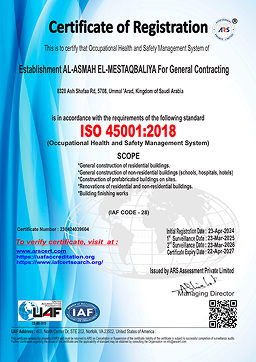
  • Develop a well-organized quality plan for each project in accordance with the latest quality standards – Management System ISO 9001:2015.

  • Define measurable, project-oriented quality objectives.

  • Provide training to employees to develop and enhance their skills.

Customer Satisfaction:

  • Complete projects according to the agreed schedule.

  • Comply with all contractual requirements and regulations.

  • Deliver optimal results without any compromise on quality or occupational safety.

Monitoring, Measuring, and Analyzing Quality Objectives:

  • Use advanced and traditional Quality Assurance (QA) and Quality Control (QC) tools to ensure objectives are achieved on a regular basis.

  • Develop periodic quality Key Performance Indicators (KPIs) for each employee and each project.

Reducing Quality Issues / Defect Prevention and Continuous Improvement:

  • Conduct root cause analysis and document lessons learned.

  • Take necessary actions in cases of failure or decline in KPIs.

  • Provide training to develop and enhance skills.

This policy was last reviewed in January 2026.

Chief Executive Officer
Hashem Omar Hashem


Quality Policy

At Future Capital General Contracting Establishment, we consider our customer-oriented approach and the organization’s core values to be central to our professional philosophy.

The foundations of our success lie in our experience in meeting client needs through selecting a team of dedicated professionals with extensive experience and strong qualifications, and in our commitment to prioritizing customer satisfaction while taking time and budget constraints into consideration.

At Future Capital, management and employees commit to:

  • Achieving customer satisfaction by delivering high-quality products on time in accordance with the agreed schedule.

  • Complying with all requirements agreed upon with clients prior to project commencement.

  • Providing appropriate tools, equipment, operational processes, and a safe working system covering all our activities, along with reasonable support to ensure success.

  • Establishing constructive relationships with our clients, suppliers, and subcontractors and enhancing their performance, as they are the backbone of our business and responsible for achieving our Quality Management System objectives.

  • Acknowledging that only through collective effort can the best possible Quality Management System performance be achieved.

  • Implementing and maintaining the requirements of the Quality Management System and using it to continuously improve our services and products.

  • Communicating this policy to all employees and subcontractors of Future Capital and ensuring their understanding through ongoing training and audit programs.

Management also ensures the enhancement of employee morale and motivation by engaging, developing, and empowering them through training and continuous competency upgrades.

Future Capital General Contracting Establishment will set objectives and review its performance through the management review process to ensure continuous improvement and effective implementation of the above.

This policy was last reviewed in January 2026.


Quality Management Methodology

Quality management ensures that project deliverables are delivered at an acceptable level of quality. The Quality Management Methodology guarantees the highest quality levels for project outputs through the quality of processes applied in managing and executing the work.

Elements:

  • Quality measurements

  • Project

  • Quality standards

  • Execution accuracy standards

  • Quality evaluation methods

  • Project deliverables

  • Quality control activities

  • Project processes

  • Quality procedure standards

  • Project owner objectives and expectations

  • Quality assurance activities


Components of the Quality Management Plan

Project Deliverables and Processes

The main project deliverables and processes subject to quality review.

Work Quality Standards

  • Execution Accuracy Standards

Quality Standards

The “measures” used to achieve successful results for executed works.

Execution Accuracy Standards

Define the completeness and quality of work execution in accordance with the owner’s requirements.
Work must be evaluated against execution accuracy standards prior to handover.

Quality Standards Procedures

  • Owner requirements


Quality Control Activities

Activities through which monitoring and verification are carried out to ensure that executed works meet the specified quality standards.

Quality Assurance Activities

Activities through which compliance with work management and execution procedures is monitored and verified, and their effectiveness is ensured.

This policy was last reviewed in January 2026.

Chief Executive Officer
Hashem Omar Hashem

Health, Safety, and Environment (HSE) Policy

  • Deliver high-quality work within the specified schedule and budget.

  • Develop a well-organized quality plan for each project in accordance with the latest quality standards – Management System ISO 9001:2015.

  • Define measurable, project-oriented quality objectives.

  • Provide training to employees to develop and enhance their skills.

Chief Executive Officer
Hashem Omar Hashem


HSE Policy Statement

At Future Capital General Contracting Establishment, we recognize that high standards of health, safety, and environmental protection are an integral part of the growth of the organization and its employees.

We are committed to providing a safe and healthy workplace for all employees and to taking all necessary measures to prevent accidents, injuries, or occupational illnesses affecting employees, contractors, or any other stakeholders. We also aim to take adequate measures to protect the environment and prevent pollution.

Senior management recognizes the importance of Health, Safety, and Environment (HSE) in achieving and sustaining excellence in our operations, in cooperation with all employees. We continuously strive to improve our HSE Management System through commitment to the following:

  • Integrating HSE considerations into business decisions and organizational operations.

  • Adopting preventive measures in our operations and practices.

  • Raising awareness among employees, contractors, business partners, and other stakeholders to develop a positive HSE culture within the organization.

  • Preventing damage, accidents, and injuries by establishing the principle of accountability.

  • Providing information and training (including emergency and crisis management) to employees, contractors, and relevant stakeholders.

  • Seeking to reduce our environmental impact by improving waste management, conserving natural resources, and encouraging conservation and recycling.

  • Developing effective planning and monitoring systems to periodically review the organization’s HSE performance and ensure corrective actions are taken.

Communication, consultation, participation, and cooperation among all employees and stakeholders support the principles of this policy. Compliance with this policy is the responsibility of all employees of the organization.

This policy is implemented in accordance with legal requirements, health and safety regulations, and our clients’ standards and practices. It is reviewed every two years, prominently displayed at office premises, and the HSE Manual is made available to all employees.

This policy was last reviewed in January 2026.

Chief Executive Officer
Hashem Omar Hashem


Occupational Safety and Health Plan

Phase One: Traffic Control in Work Areas

When work activities conflict with pedestrian or vehicle traffic, a traffic management plan for the work area shall be prepared and approved by the consultant. This plan shall include routes, signage, and barriers in accordance with the Traffic Control Manual issued by the Ministry of Municipal and Rural Affairs.

  • Train flagmen to organize, stop, and coordinate traffic.

  • Provide communication means where direct communication is difficult.

  • Carefully select flagmen based on fitness, behavior, responsibility, and communication ability.


Construction Equipment and Machinery Measures

  • Protect work areas with appropriate signs or barriers.

  • Prohibit operation near electrical utilities without preventive measures.

  • Ensure front and rear lighting safety.

  • Equip machinery with reverse alarms.

  • Operate equipment only by trained workers.

  • Ensure stability of backfill and access routes.

  • Keep asphalt spraying trucks away from flammable materials.


Manual and Mechanical Work Equipment Measures

  • Ensure suitability of weight and design to users’ capabilities.

  • Do not use damaged equipment.

  • Insulate and ground portable electrical tools.

  • Provide power cut-off switches.

  • Provide means for transporting and storing equipment.

  • Ensure safety of equipment and air hoses.


Noise and Dust Control Measures

  • Reduce noise to the lowest possible level.

  • Consider 90 dB as the maximum limit for 8 working hours.

  • Take preventive measures at 85 dB.

  • Post mandatory signage for hearing protection.

  • Reduce dust emissions and moisten surfaces.

  • Provide special respiratory masks during dust storms.


Required HSE Elements

What will be provided for the project includes:

  • An approved HSE plan and official records.

  • Appointment of a site safety officer.

  • Awareness meetings and posters.

  • Risk assessment records and permits for hazardous works.

  • Periodic inspections and corrective actions.

  • Personal Protective Equipment (PPE): helmets, goggles, gloves, safety shoes, etc.

  • Signage, barriers, lighting, and clearly defined entrances and exits.

  • Excavation and fall protection measures.

  • Requirements for cranes and heavy equipment.

  • Electrical systems compliant with safety specifications.

  • Firefighting equipment and safe storage of flammable materials.

  • Safe walkways, accident records, first aid, adequate ventilation, and lighting.


Organizational Arrangements to Achieve HSE Requirements

(Shared Responsibility)

Contractor Responsibilities

  • Provide precautions, protection, and training.

  • Conduct risk assessments and accident investigations.

  • Provide safety staff and medical services.

  • Maintain records and report accidents.

Worker Duties

  • Comply with instructions and use PPE.

  • Report hazards and accidents.

  • Wear work clothing and participate in training.

Safety Supervisor Responsibilities

  • Prepare safety plans and conduct regular inspections.

  • Identify, measure, and document hazards.

  • Investigate accidents and prepare reports.

  • Organize first aid and firefighting activities.

  • Supervise training and awareness programs.


Summary of the Occupational Safety and Health Plan

Occupational safety and health aims to:

  • Preserve and promote workers’ health by preventing occupational accidents and diseases, controlling them where possible, and eliminating harmful occupational factors and conditions during work.

  • Develop and promote safe work practices and healthy work environments, thereby enhancing and improving productivity.

  • Enhance the physical, psychological, and social well-being of workers and provide the necessary support to maintain and develop their professional and social capacities.

Safety at work sites is a shared responsibility borne by everyone. Under local laws and international standards, it is our duty to provide all necessary means, procedures, and precautions to protect workers from occupational hazards and to inform them accordingly.

Occupational safety and health focuses on two main elements:

  • Providing protection from hazards at work sites.

  • Preserving and caring for workers’ health against short-term and long-term health threats arising from the nature of work, through providing safety requirements, including trained and qualified personnel knowledgeable in occupational safety and health issues.

After identifying occupational hazards and training on correct methods to avoid them, proper work procedures, and providing the necessary tools and equipment for implementation—which are among the most important means of protecting workers—both workers and employers share responsibility for implementation, compliance, and success. Common examples include training on work procedures and implementing emergency and evacuation plans, along with providing first aid equipment and fire protection systems.

This plan was last reviewed in January 2026.

Chief Executive Officer
Hashem Omar Hashem

Risk Management Plan

Health, Safety, and Environment (HSE) Risk Management Methodology

Objectives of Risk Management

  • Protect workers from occupational hazards.

  • Establish specific procedures to prevent risks.

  • Analyze the workplace to identify sources of hazards.

  • Evaluate existing safety measures and develop them.

  • Analyze occupational risks and define specific safety procedures for each.

  • Divide and classify hazardous areas and establish appropriate procedures and guidelines.


Risk Management Steps

1. Hazard Identification

The process of identifying hazardous factors or conditions that may cause an accident or occupational disease, and identifying the groups exposed to them.

2. Risk Assessment and Analysis (Prioritization)

Based on:

  • Severity of harm

  • Probability of occurrence

Assessment Steps:

  • Estimating the likelihood of the hazard

  • Estimating the severity of harm

  • Calculating the risk rating (from 1 to 25)

Risk Classification:

  • High / Urgent: 15–25

  • Medium: 6–12

  • Low: Less than 6

  • Setting priorities based on time and cost.

3. Risk Control

  • Planning

  • Implementation and monitoring

  • Control and continuous improvement

This policy was last reviewed in January 2026.

Chief Executive Officer
Hashem Omar Hashem


Institutional Risk Management Plan

Introduction

Future Capital General Contracting Establishment considers risks among the most critical factors affecting project progress. Accordingly, a scientific risk management plan has been developed to reduce losses and ensure business continuity.


Risk Concept

Risk management is an integrated system that aims to:

  • Reduce strategic, financial, and operational risks.

  • Support the achievement of objectives.

  • Prepare for the future.

  • Capitalize on opportunities.


Objectives of Risk Management

  • Raising awareness.

  • Building a risk management culture.

  • Identifying and analyzing risks.

  • Estimating costs.

  • Developing response and mitigation plans.

  • Defining roles and responsibilities.

  • Training and follow-up.


Risk Identification

  • Involvement of project specialists.

  • A continuous process.

  • Engagement of employees and stakeholders.

Identification Methods:

  • Objective-based identification.

  • Classification-based identification.

  • Review of previous risks.


Risk Assessment

  • Risk analysis.

  • Determining probability, impact, and time.

  • Setting priorities.

  • Updating the risk register.


Qualitative Risk Analysis

  • Document review.

  • Assumption analysis.

  • SWOT analysis.

  • Expert judgment.


Quantitative Risk Analysis

  • Probability–impact matrix.

  • Data evaluation.

  • Updating the risk register.


Chief Executive Officer
Hashem Omar Hashem

Company Policies

Quality Policy

Introduction
The Quality Policy defines the guiding principles for Future Capital Contracting Company and its subsidiaries (hereinafter referred to as “the Group”) regarding the continuous provision of high-quality services to clients and external parties (suppliers, contractors, service providers, etc.) associated with the organization.
The core philosophy of our company, Future Capital Contracting, is the pursuit of excellence in quality, focusing on customer satisfaction, innovation, and adherence to the Group’s code of conduct and business ethics policy.

Scope
This policy applies to Future Capital Contracting Company and its subsidiaries that do not have relevant policies suitable for their operations.
The policy covers all areas of the Group’s business operations and applies to all managers, executives, and employees working for or on behalf of the Group.
It also extends to outsourced or seconded employees working exclusively for or on behalf of the Group.
The policy also applies to external parties operating at its premises.
The Group encourages these external parties to adopt similar policies in line with the Group’s Supplier Code of Conduct.

Policy Statement
The Group is committed to achieving excellence in quality management.
This commitment ensures that services are delivered efficiently, responsibly, and aligned with proactive quality management practices supported by industry standards, while adhering to the code of conduct and business ethics of Future Capital Contracting.
The key to this commitment lies in the seven principles of quality management:

  • Engaging People

  • Customer Focus

  • Leadership

  • Process Approach

  • Improvement

  • Evidence-based Decision Making

  • Relationship Management

Product Governance
Future Capital Contracting places product governance at the forefront of its quality objectives.
Ensuring product safety, quality, and responsible branding is an integral part of our operations.
Our dedication to product governance aligns with our environmental policy, ensuring our products are high-quality and environmentally responsible.

Quality Management System
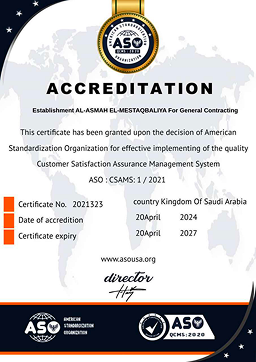
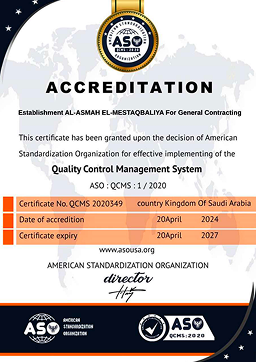
Future Capital Contracting emphasizes adopting and implementing a Quality Management System compliant with the International Organization for Standardization ISO 9001:2015.
This system ensures efficient service delivery, continuous improvement, and adherence to customer satisfaction metrics.
Regular audits, reviews, and monitoring confirm a quality-focused service environment while ensuring compliance with our code of conduct and ethics policy.

Customer Satisfaction
Our operations depend on the welfare and satisfaction of our customers.
This dedication ensures all stakeholders benefit from the high-quality standards maintained by the organization.
Customer feedback is integrated into executive evaluations, promoting a culture of excellence and accountability throughout the organization.

Innovation in Quality
Future Capital Contracting supports innovative strategies to improve service quality, particularly during resource management transitions and process enhancements.
With defined quality objectives, the company remains committed to continuously improving its service delivery and conducting regular performance evaluations.

Non-conformance and Emergency
Future Capital Contracting sets objectives and reviews its performance through management review processes, ensuring continuous policy improvement and effective implementation.
In cases of non-conformance with the organization’s high-quality standards, emergency processes are initiated to ensure swift and effective correction, with additional measures to mitigate recurrence.

Stakeholder Engagement
The Group fosters close relationships with key stakeholders to ensure a clear understanding of their quality concerns.
By engaging stakeholders, the Group identifies critical quality factors for them and incorporates these considerations into this policy.

Training and Awareness
The Group is committed to continuously investing in the training and development of its employees and external parties regarding quality management and excellence.
The Group aims to regularly instill awareness, enhance understanding of the principles outlined in this policy, and enable individuals to adhere to these standards and effectively mitigate risks.

Compliance
The Group ensures regular monitoring of its activities to comply with applicable laws and regulations in the jurisdictions in which it operates.
The Group conducts annual internal audits of quality practices, reports the results to relevant stakeholders, and seeks external audits to align commitments with industry standards.

Roles and Responsibilities
The CEO is responsible for establishing the policy (including any amendments) and monitoring compliance.
The COO and/or General Managers of subsidiaries, along with heads of quality departments, managers, or relevant supervisors, are responsible for implementing this policy and continuously improving their operational areas.
All individuals working for or on behalf of the Group are responsible for supporting the principles set out in this policy.

Reporting and Transparency
Future Capital Contracting encourages stakeholders to report concerns, doubts, or potential violations of this policy.

Policy Review
The Group believes in continuously improving its performance across all its activities and services.
The Group will review this policy as necessary to ensure it remains up to date and aligned with the organization’s mission, vision, core values, laws and regulations in host countries, and global best practices.
Any changes to this policy will be communicated through appropriate channels, with each version including an updated effective date.
Stakeholders are advised to refer to the Group’s official channels for the most recent policy.

Last reviewed: January 2026

CEO
Hashim Omar Hashim